Wellness · Paradigm
Luxury Wellness Centers: A New Healing Paradigm
The category has grown faster than its definition. Here is a working one, and how to test any center against it.

Twenty years ago the phrase "wellness center" described a spa with a nutritionist. Today it is used for everything from a hotel gym to a licensed medical facility running diagnostics, intravenous protocols and physician-supervised therapeutic work. The word has stretched to the point of being uninformative, which is a problem if you are trying to choose between them.
A more useful definition is functional. A luxury wellness center is a residential setting where a clinical team assesses an individual, designs a protocol from that assessment, delivers it under supervision, and measures whether it worked. Everything else — the architecture, the food, the view — is the environment in which that happens. Excellent environments matter, but they are not the mechanism.
The distinction matters most for people who are not simply tired. If sleep, mood, cognition, pain or dependency are involved, you are in medical territory, and the World Health Organization frames mental health as a state requiring the same rigour as any other domain of health rather than a lifestyle adjunct.
The first test: who assesses you, and with what
A serious center opens with a clinical intake — history, medications, previous treatment, labs, and where relevant imaging or cardiac screening — before anything is scheduled. A weaker one opens with a menu and asks which treatments you would like.
The difference shows up in what happens when something is found. If a program has no way of adjusting to an abnormal result, the assessment was decorative. Ask what the last three protocol changes were and why they were made.
The second test: hours, and who delivers them
Programs are usually described by length, which tells you very little. What matters is contact hours: how many hours a day a licensed practitioner is actually working with you, and whether that time is one-to-one or shared with a room.
Sanctuary Tulum runs on more than thirty-five hours of one-to-one therapeutic and medical work per week, with no group programming and no shared accommodation. That figure, not the number of weeks, is what makes a short stay productive.
Ask for the schedule, not the brochure. A real program can show you an hour-by-hour Tuesday.
Sanctuary Tulum
Six questions that separate categories quickly
None of these are hostile. Any well-run center will have immediate answers.
Who is on site overnight?
Clinical cover, not concierge cover.
How many guests at once?
Census determines how individual the day can be.
What is measured?
Which markers are taken at intake, mid-stay and discharge.
Who writes the protocol?
A named clinician, or a template.
What happens if I destabilise?
The escalation pathway, in plain language.
What do I leave with?
A written plan, or a goodbye.
The third test: what the therapies are actually for
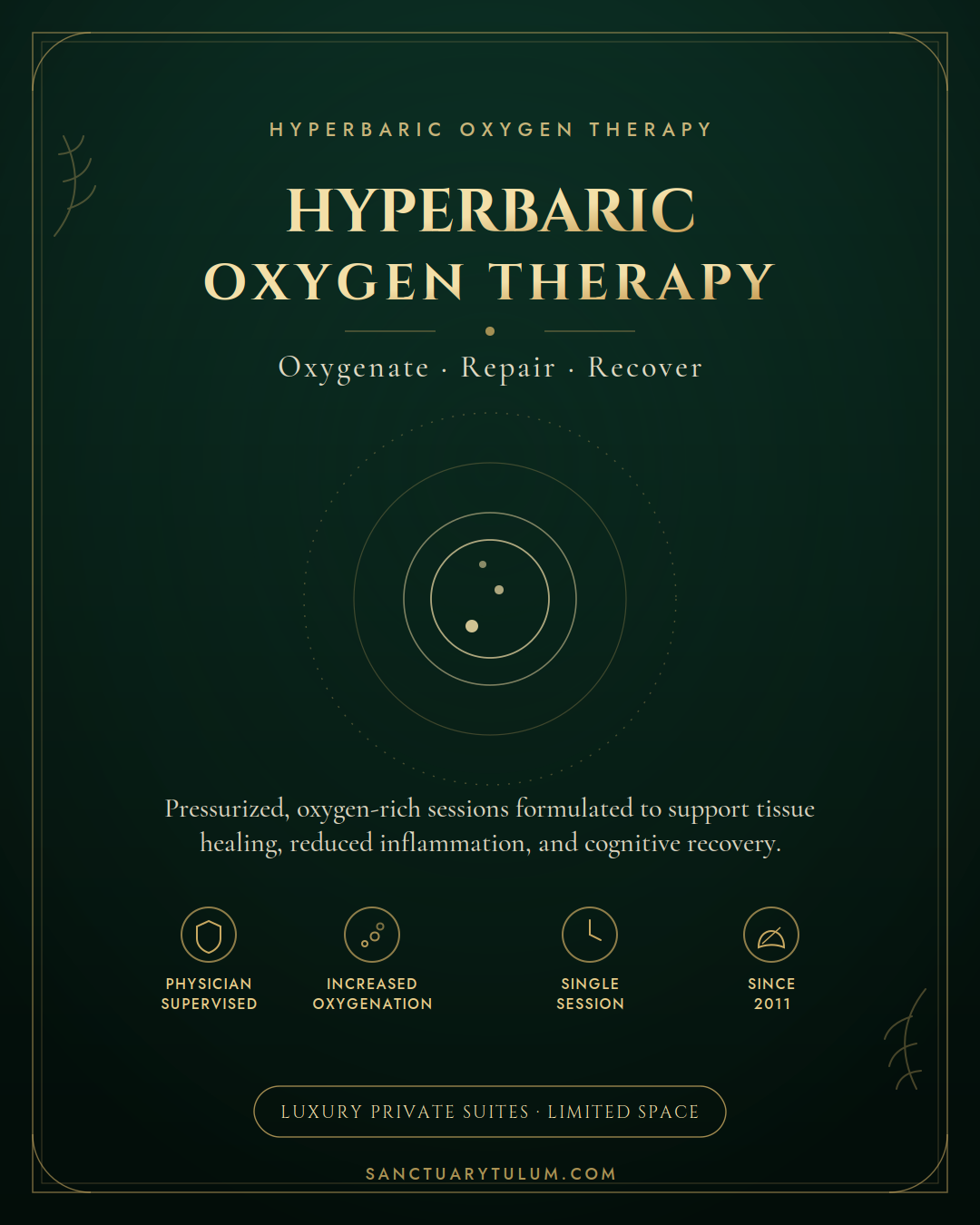
Modalities are easy to collect and hard to justify. A center should be able to explain, for each therapy it offers, what physiological problem it addresses and how the effect is assessed. Hyperbaric oxygen, NAD+ IV, Brain Repair IV protocols, stem cell therapy and infrared sauna each have a specific role in our protocols; none is offered as a default.
The same applies in reverse. A center that offers everything to everyone has usually stopped assessing.
Nutrition, sleep and the unglamorous variables
The interventions people travel for tend to work better on a repaired base: consistent sleep, dense nutrition, daylight, movement and the absence of alcohol. These are unfashionable and they are also where much of the early improvement comes from.
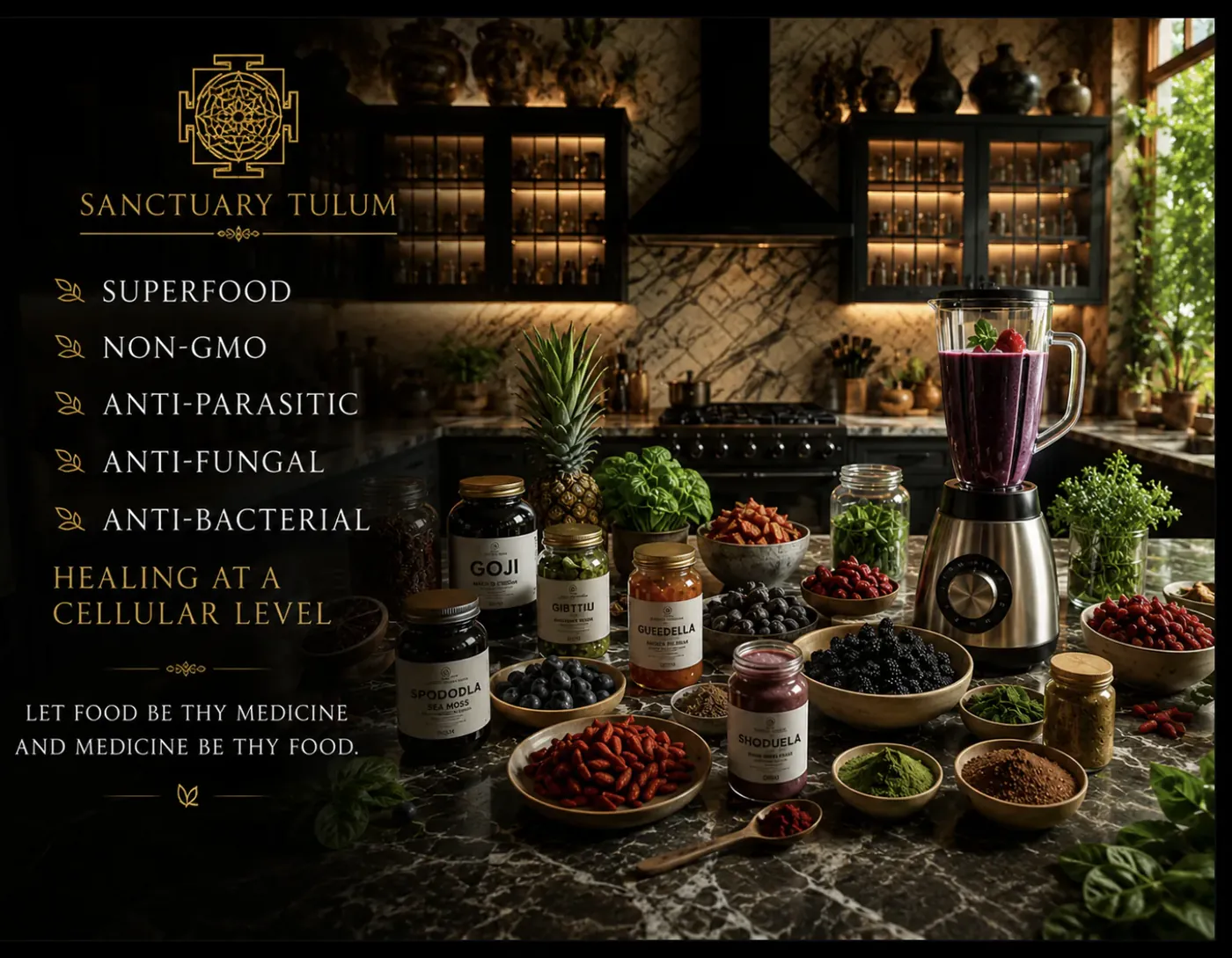
Our kitchen is entirely organic and plant-forward, and meals are treated as part of the protocol rather than hospitality. Guests routinely report that the first genuine change they notice is sleep, usually inside the first ten days.
Why the medical framing matters
There is a temptation to treat wellness as the gentle alternative to medicine. In practice the two are not opposites, and the centers producing durable change are the ones that behave like clinical facilities while feeling like something else entirely.
The National Institute of Mental Health and NIDA both emphasise individualised, sustained care over brief generic episodes. That is a clinical standard, not a luxury one — but delivering it at genuinely individual intensity is expensive, which is one honest reason these programs cost what they do.
Sanctuary Tulum has worked this way since 2011, without talk therapy, group work or psychiatric medication, using the Pouyan Method as the organising protocol.
Choosing between a wellness center and a rehab
The practical dividing line is risk. If withdrawal, self-harm risk, an unstable medical condition or a long medication history is present, you need a facility with medical capability regardless of what it calls itself. If the presenting problem is exhaustion, burnout or a plateau in health, a restorative program is a reasonable fit.
Many people sit between the two, which is why the assessment matters more than the label on the door. A center that will tell you honestly that you are not a fit is more trustworthy than one that admits everybody.
If you are comparing options, our luxury wellness center page sets out the restorative track, the luxury residential rehab page covers clinical admissions, and programs and pricing shows what each stay includes. Sanctuary Tulum operates as a licensed luxury depression clinic and oceanfront healing center with physicians on site.
A final note on the word 'luxury'
Used well, luxury in this context means low density, high attention and the removal of friction — not marble. The reason it correlates with outcomes is unremarkable: fewer guests means more clinical hours per guest, and a calm environment lowers the physiological load a nervous system is carrying while it recovers.
Judge a center on those two variables and the category confusion resolves quickly. You can reach our admissions team through the contact page, or read about our team and history first.
Spa, retreat, or medically supervised facility: the real dividing lines
The three categories get used interchangeably in marketing, but the differences are structural. A spa operates under a hospitality license: no physician of record, no medication management, and no protocol for a medical event beyond calling local emergency services. A group wellness retreat typically adds a visiting practitioner or two, but the center of gravity is still lifestyle programming rather than clinical care. A medically supervised facility is licensed as a health facility, carries a named medical director, maintains nursing coverage, and can legally manage medication changes and emergencies on site. None of these is inherently better — they solve different problems — but conflating them leads people to bring a medical-grade need to a hospitality-grade setting.
Ask directly which category a prospective program falls into. If a facility cannot describe its medical licensing in specific terms — who issued it, what it authorises — treat that vagueness itself as an answer.
What a real clinical intake looks like
A serious intake covers medical history, current medications, recent labs, and — where a modality carries cardiac relevance — a baseline ECG, all reviewed by a physician before a single session is booked. That review is what individualises the schedule: two guests arriving the same week can have entirely different daily plans because their starting points differ. The National Institute on Drug Abuse frames individualised, adjustable treatment planning as foundational to effective care, not a premium add-on, which is worth remembering when a program's schedule looks identical for every guest regardless of what intake found.
Sequencing, not just a menu of therapies
A center's therapy list matters less than how those therapies are ordered and adjusted. Modalities like hyperbaric oxygen are staged around a guest's response rather than delivered on a fixed schedule irrespective of how the guest is doing; a 2024 review in Frontiers in Neurology on hyperbaric oxygen as a neuromodulatory technique describes exactly this kind of dose- and timing-dependent effect. The same logic applies to nutrition, movement and rest: sequencing them around a guest's physiological baseline, and revising that sequence mid-stay, is where the clinical judgment — and the cost of delivering it — actually lives.
Who each setting is, and is not, appropriate for
A spa or lifestyle retreat suits someone managing ordinary stress or fatigue with no unstable medical condition and no medication requiring monitored adjustment. A medically supervised facility is the appropriate — often the only responsible — choice for anyone in active withdrawal, managing a complex medication regimen, or carrying a condition where an adverse event needs a physician on site rather than a call to a local clinic. Matching the setting to the actual risk, rather than to the marketing language on the website, is the single most consequential decision in this comparison.